

How to Plan an E-commerce Website: Features, Platform and Payment Setup
Dive Into Our Podcast
Start with how you'll sell, not how it'll look
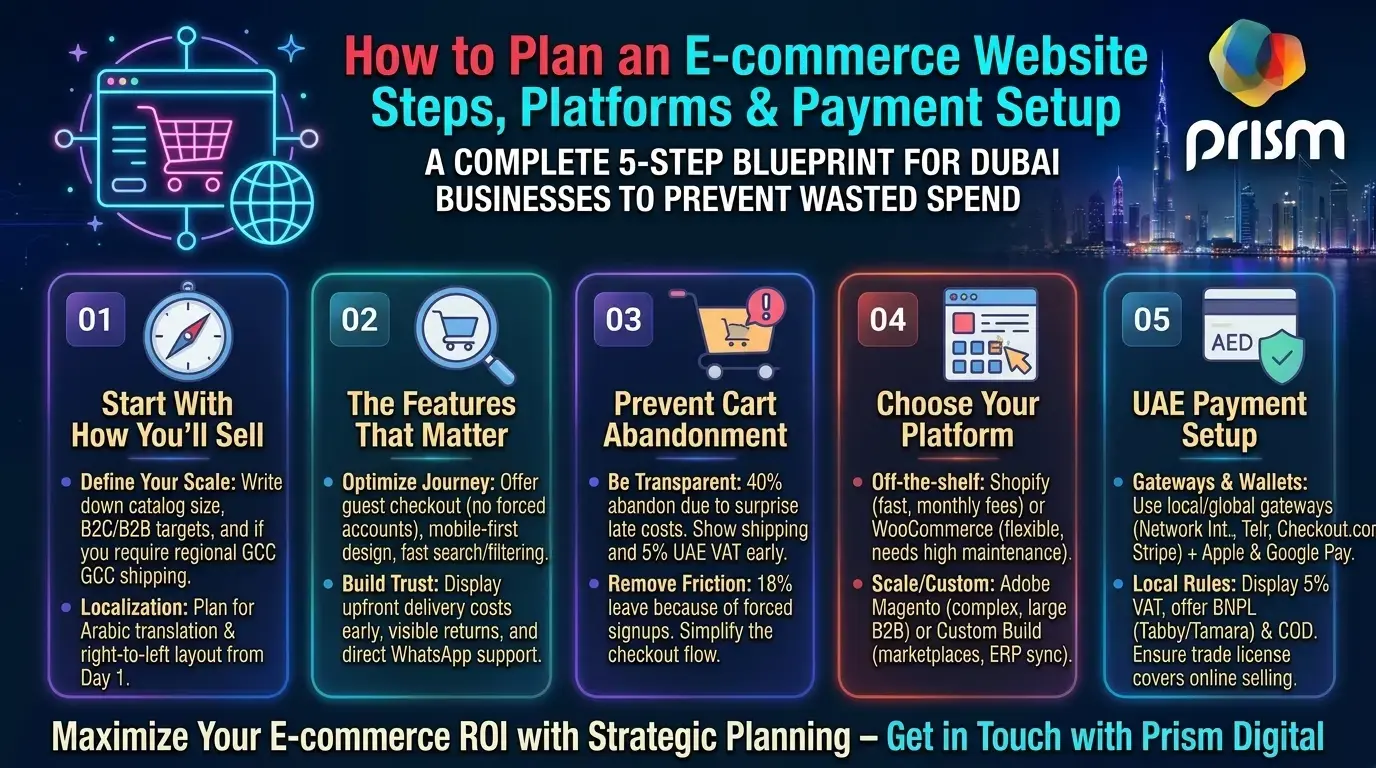
Before anyone opens a design tool, write down the basics. How many products will you launch with, and how many in two years? Do you sell to consumers, businesses or both? Will you ship only within the UAE or across the GCC? Do you need Arabic from day one?
Those answers decide almost everything else, from the platform to the budget. A shop with 40 products delivering in Dubai is a very different project from a 5,000-product catalogue shipping to Riyadh and Kuwait City.
The features that actually matter
Fancy features impress in a pitch. These ones make money:
- Fast, filterable product pages with clear photos, prices and delivery times
- Guest checkout, so people don't have to create an account to buy
- Arabic and English versions, with proper right-to-left layouts
- Mobile-first design, since most UAE shoppers browse on their phones
- Delivery options and costs shown before checkout, not sprung at the end
- Simple returns information and visible contact details, including WhatsApp
That fifth point deserves emphasis. Baymard Institute's research across 50 studies puts the average cart abandonment rate at around 70%. The biggest single reason, cited by 40% of shoppers, is extra costs like shipping or fees appearing late. A further 18% leave because they're forced to create an account.
Choosing a platform
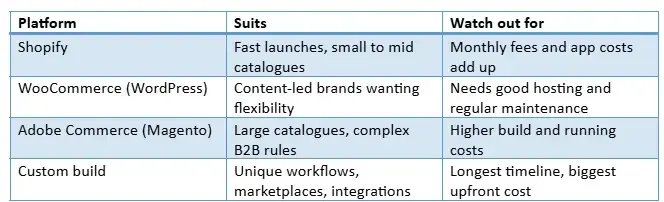
There's no universally best platform, only the one that fits your catalogue, budget and plans.
If your store needs things off-the-shelf platforms struggle with, such as a multi-vendor marketplace, livestock from an ERP or custom pricing for trade customers, you're really looking at web application development rather than a standard shop.
Getting payments right in the UAE
This is where local knowledge matters most. You'll need a payment gateway to accept cards, and there are several established options in the UAE, from local providers like Network International and Telr to international ones such as Checkout.com and Stripe, which has operated here since 2021. Compare setup fees, transaction rates, settlement times and how quickly they approve your account, because approvals can take weeks.
Beyond cards, think about Apple Pay and Google Pay for faster mobile checkout, and buy-now-pay-later options like Tabby and Tamara, which are popular with UAE shoppers on bigger baskets. Cash on delivery still has a place for first-time customers who don't yet trust your brand, though it brings more failed deliveries.
Two more practical points. Make sure your trade licence covers online selling before you apply for a gateway, and build 5% VAT into displayed prices so customers never meet a surprise at checkout. 19% of shoppers in Baymard's research abandoned because they didn't trust a site with their card details, so visible security badges and recognizable payment logos genuinely help.
Don't forget what happens after launch
A store needs reliable web hostingthat copes with sale-day traffic, plus a plan to bring visitors in. E-commerce marketing and SEO should be part of the brief from the start, not an afterthought once the site is live. Our list of website features every Dubai business needs is a useful cross-check.
Frequently asked questions
How long does it take to build an e-commerce website in Dubai?
A Shopify store with a modest catalogue can launch in four to eight weeks. Custom or large WooCommerce and Magento builds usually take three to six months.
Which payment gateway is best in the UAE?
It depends on your volumes, products and markets. Compare transaction fees, settlement times and approval requirements before choosing.
Should I offer cash on delivery?
It can help win first-time buyers, but it increases failed deliveries. Many stores offer it early and phase it down as trust grows.
Do I need a developer, or can I build it myself?
Simple Shopify stores can be set up in-house. For bilingual stores, integrations or custom features, a web development company Dubai brands trust will save time and costly mistakes. To scope your e-commerce website development Dubaiproject properly, explore our website development Dubai services or talk to our team .

About The Author: Lovetto Nazareth
Lovetto Nazareth is the Founder & CEO of Prism Digital, a Dubai-based digital marketing and advertising agency he started nearly two decades ago from a laptop and a vision, as he puts it, to one of the region's established full-service agencies spanning SEO, PPC, social media, web design, and PR.
Over more than 19 years in advertising and digital marketing, Lovetto has guided thousands of campaigns across the UAE and GCC, working across sectors from real estate to hospitality to fintech. He writes and speaks on digital transformation and marketing strategy, and has contributed opinion pieces to Campaign Middle East, one of the region's leading marketing trade publications.
He takes a data-first approach to growth testing, measuring, and iterating rather than relying on guesswork and outside of work he's an adventure sports enthusiast and a singer-songwriter.
Post Your Comment!
Recent Blogs
View Blogs
How to Plan an E-commerce Website: Features, Platform and Payment Setup

How to Plan a Social Media Campaign Step by Step: Goal, Audience, Content and Budget

What Is Website Maintenance? Updates, Backups, Security and Speed Explained