

GEO, AEO, LLMO vs SEO: New Strategy or Just Old Wine in a New AI Bottle?
Dive Into Our Podcast
What Is SEO Today—and Why It Still Foundational to Our Work
SEO or Search Engine Optimization has always experienced constant evolution. It was the good times and the bad times of mobile-first indexing, voice search, and featured snippets that still remain as its core today albeit a little differently than then, i.e. large-scale user-centered content creation, technical infrastructure for crawlers, and designing trust with back links that are the signals of authority. Adhering to these basics, one not only satisfies the user's intent but also demonstrates the E-E-A-T (Experience, Expertise, Authority, Trust) criteria that the search engines use in assessing content. So when the search gets reformed, these pillars don’t crumble under the weight of the, rather they become the buttress of any new form of visibility, be it the traditional results or an AI Overview. Therefore, even an up-to-date optimization strategy has to rest on the time-tested SEO principles.
Defining the New Buzzwords: GEO, AEO, and LLMO
It is necessary to know what these new abbreviations indeed imply in order to cut through the noise. They are not substitutions for SEO, but rather specialized perspectives that concentrate on specific AI-driven results.
AEO (Answer Engine Optimization):
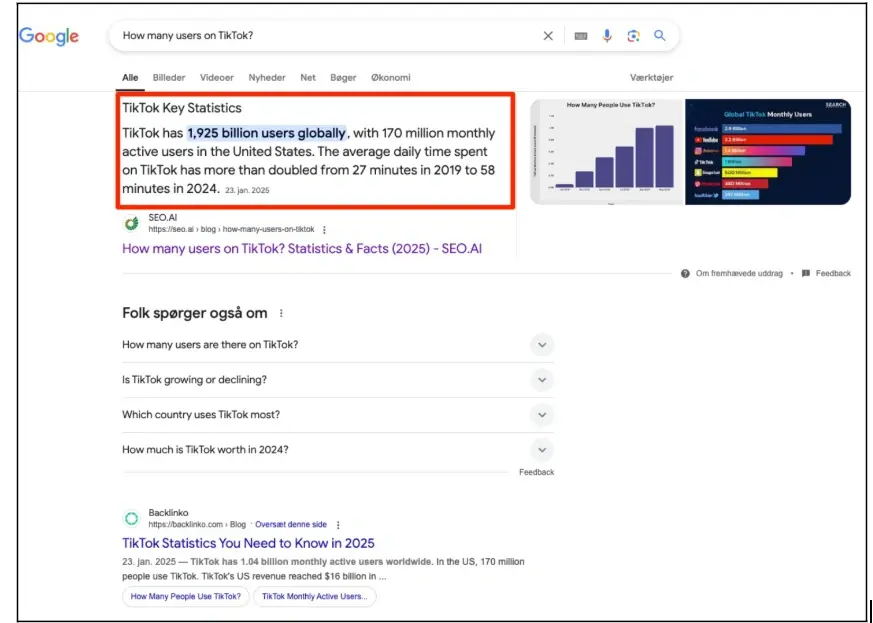
It is all about the selection of content as direct answer to a query. Zero Position featured snippet or the brief answer in a voice search result are the examples to think of. In the way marketing expert Neil Patel puts it, AEO is a process of content structuring that directly and clearly answers to specific questions. The ultimate aim is to possess the answer in such a way that the user does not have to click anywhere else.
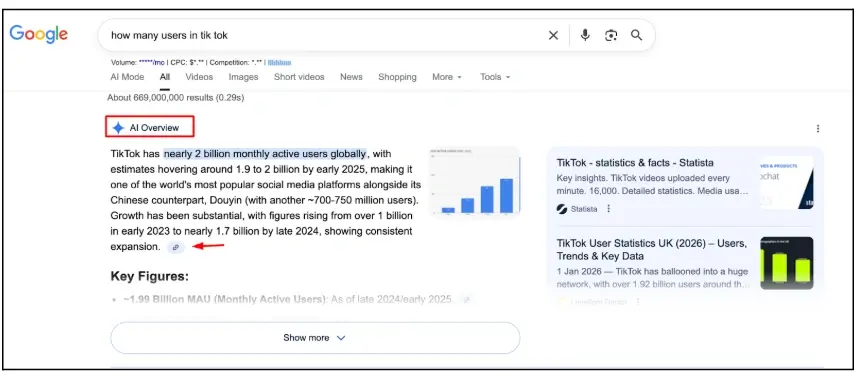
The high-quality content appears in Zero Position i.e. the top of the search. It is now replaced by the AI Overview as shown below.
GEO (Generative Engine Optimization):
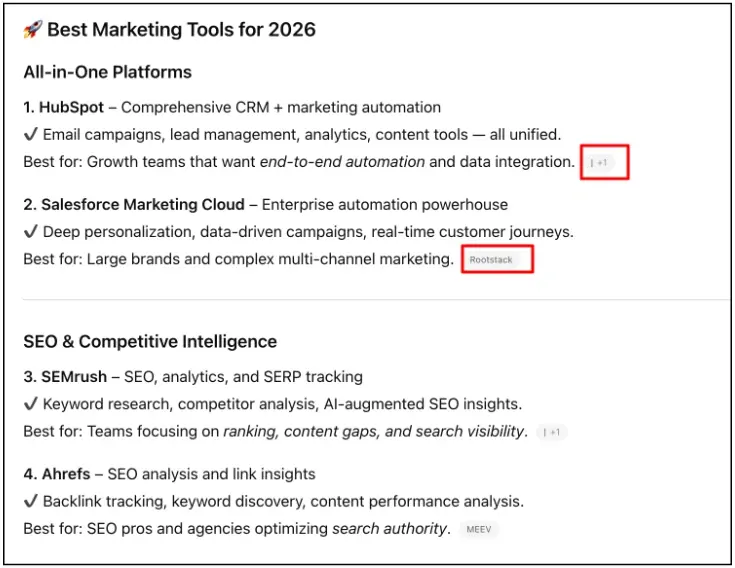
This is a term that is becoming more and more popular and paved through the research by several companies, it refers to the process of getting content optimized in such a way that generative AI systems like Google’s AI Overviews or ChatGPT will cite or summarize it. For instance, if you produce a definitive guide, GEO will learn to have the guide used as a source for an AI-generated answer. The brand is not just ranked #1 in the search but it gets mentioned and cited in these AI outputs which is a mark of success.
LLMO (Large Language Model Optimization):
The usage of this term indicates the existence of the largest layer in the above-mentioned categories. It aims at the digital footprint of the whole company—content, brand mentions, entity associations—being optimized for the sake of understanding and recognizing that the company is a topical authority by Large Language Models (LLMs). The goal is to become a reliable source in the training data and knowledge base of the AI.
Where the Industry Agrees: The Unchanging Core
Despite the new terminology, leading experts and community discussions reveal a powerful consensus. The fundamental strategy for creating successful content has not been rewritten.
1. Quality Human Content is Non-Negotiable:
The rise of AI-generated spam has made Google's systems better than ever at detecting and demoting low-value content. As emphasized across Reddit SEO communities, creating unique, expert-driven, and genuinely helpful content is the single most important tactic. As one practitioner noted, "AI generates answers based on reputable, reliable resources." Your goal is to be that resource.
2. Structure and Context are King:
To be understood by both users and AI, content must be well-structured. This includes using clear headings (H1, H2, H3), providing concise summaries, and employing schema markup (like FAQ and How-To) to explicitly define your content's purpose. This is a key strategy for optimizing content for Google AI Overviews, as it helps AI parse and extract information accurately.
3. Authority and Trust Trump Everything:
AI models are trained to prioritize authoritative sources. This means building topical authority through in-depth content and earning reputable backlinks remains paramount. Furthermore, unlinked brand mentions across news sites, review platforms, and social media now carry significant weight in establishing entity recognition—a core tenet of GEO and LLMO.
The shared insight is powerful: you do not need separate content for SEO, GEO, and AEO. One expertly crafted page, built on these timeless principles, can succeed across all formats.
Where the Debate Lies: Is This a Real Shift?
The divergence of views in the industrial sector is not around the basic issues but rather around the emphasis and measurement differences.
The "It's Just SEO" Camp: A significant number of analysts, Ahrefs being one of them, think that GEO and AEO are merely the present-day uses of the long-standing SEO principles. The contrary side asserts that by making the user's query answered in the best possible way which is an essential SEO principle, one will naturally get a good position in AI systems. The tools and tactics haven't changed; the distribution channel has.
The "Visibility Has Expanded" Camp: Others, like Backlinko, point out a tangible shift in what "visibility" means. Previously, success was a ranking on Page 1. Now, a brand can gain immense value by being cited in an AI Overview that appears *above* all organic results, even without a click. This requires a slight shift in thinking to value mentions and citations as much as traditional link equity.
The debate on platforms like Reddit often centers on practical testing. Marketers are experimenting with whether crafting content specifically for AI consumption—using certain linguistic patterns or data formats—yields better citation rates, suggesting there might be nuanced tactics emerging within the unchanged strategic framework.
Practical Strategies That Bridge SEO and AI
Building new solutions is not what enterprises need, they need to make existing systems work better. Here are some quick and general tips for both standard and AI-powered search optimization strategies:
Concentrate on "Citation-Worthy" Material: Create the most thoroughly and flawlessly researched guide/study/dataset etc. that ends up being the main source without unnecessarily seeking citations. Be the source other people — and AI — will want to cite.
Format for Easy Reading: Use clear, succinct headings, bulleted points and information boxes. This enables AI to identify key information and be summarized for human readers.
Help with Entity Recognition: Use the same brand details (name, address, industry) consistently across the web (Google Business Profile, directories, Wikipedia if applicable). This makes AI models to understand who you are and what you are about.
Answer Questions First, then Explain Further: Design your content to provide a very clear and concise answer right at the beginning (this is good for AEO), then expand on the answer with more information, examples, evidence, etc. so that when you satisfy the users immediate need you send them in a direction to find out even more (this is compliant with EEAT and full-article SEO). It’s also in line with the highest performing conversion rate optimization strategies in terms of user satisfaction and bounce rate percentages.
What This Means for Businesses and Marketers
This understanding is empowering for the world of companies. That is to say; do not completely drop the reliable SEO. On the contrary, make sure that your way is modernized. It is not the intention to follow the trendy word of the month but to perform the basic SEO with great quality, which will automatically safeguard and grow your presence in an AI world.
At this point, proper selection of the right skill becomes crucial. An intelligent SEO consultant in Dubai or a cutting-edge SEO marketing agency will not offer you a distinct "GEO package." They will instead evaluate your current plan and transform it to ensure it is tough and full of opportunities in the realm of searches. They can guide you to discover if your technical framework is prepared for AI crawling, if your content is arranged for answer extraction, and how to confer authority that AI systems would acknowledge. When looking for SEO services in Dubai, choose the ones who are masters in the mentioned concepts and are able to customize them into a unified, fundamentals-first strategy.
Final Verdict: Evolution, Not Revolution
So, is GEO vs SEO a new strategy? The answer is nuanced. Whether its SEO strategy or GEO strategy—creating high-quality, authoritative, user-focused content—remains unchanged. What has shifted is the tactical environment. SEO is no longer just about ranking on a page; it's about being recognized as a source worthy of citation across multiple new interfaces, from AI Overviews to chatbot answers.
The smartest approach is to see GEO, AEO, and LLMO not as replacements, but as descriptions of new visibility goals within the same enduring optimization framework. By focusing on the timeless principles of quality and authority, you future-proof your presence against whatever form search takes next.
Food for Thought
1. If AI summaries reduce clicks, how should brands redefine SEO success beyond rankings? Consider brand awareness, citation volume, and lead quality as new KPIs.
2. Should visibility inside AI tools matter more than owning the #1 organic position? A citation in an AI Overview may reach more users than the top link, but doesn't guarantee a site visit.
3. Are most businesses overcomplicating GEO vs SEO instead of improving content quality and authority? Often, the buzzwords distract from the core work of creating genuinely better content.
Need expert answers to all these questions or want your business to be taken care by the top SEO agency in Dubai? Connect with Prism Digital today! We’re open to businesses of all sizes but only to those that take marketing seriously!

About The Author: Lovetto Nazareth
Lovetto Nazareth is the Founder & CEO of Prism Digital, a Dubai-based digital marketing and advertising agency he started nearly two decades ago from a laptop and a vision, as he puts it, to one of the region's established full-service agencies spanning SEO, PPC, social media, web design, and PR.
Over more than 19 years in advertising and digital marketing, Lovetto has guided thousands of campaigns across the UAE and GCC, working across sectors from real estate to hospitality to fintech. He writes and speaks on digital transformation and marketing strategy, and has contributed opinion pieces to Campaign Middle East, one of the region's leading marketing trade publications.
He takes a data-first approach to growth testing, measuring, and iterating rather than relying on guesswork and outside of work he's an adventure sports enthusiast and a singer-songwriter.